
What does “up for…” mean?
"Be up for" means willing or interested. But in phrases like "sign up for" or "line up for", you need to read the whole verb phrase, not only "up for".
When people say it
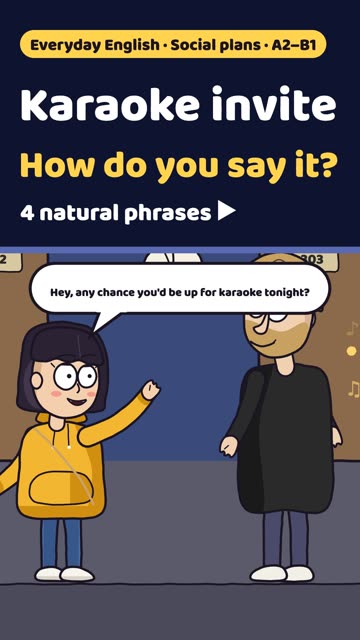
- "be up for" + noun or -ing: willing or interested. Example: "Are you up for karaoke?"
- "sign up for" + class, event, membership: register. Example: "Can I sign up for a membership today?"
- "line up for" + tickets, food, service: wait in a line. Example: "Fans lined up for tickets." In British English, people often say "queue for".
- Sometimes the pattern is just verb + "up", then "for someone" shows who gets the action. This is not the phrase "up for". Example: "Could you heat this up for me?"
Tone: "Be up for" is casual and friendly; "sign up for" is neutral, and "line up for" is also neutral, though British English often prefers "queue for".
See it in a scene
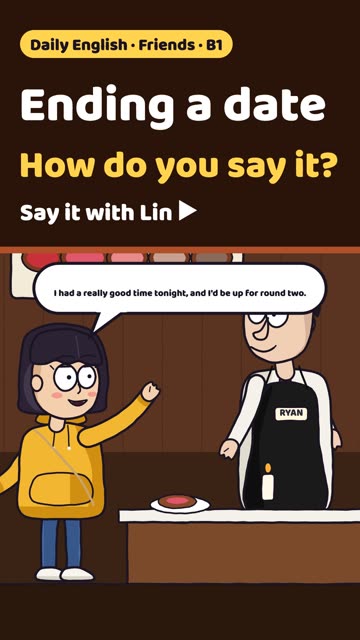
I had a really good time tonight, and I'd be up for round two.
Practise it in “Ending a date”In 7 of Lin's scenes
Real lines from the scenes. Open one to watch it and say it yourself.



Shadow
Line by line
Ask Lin about “up for…”
Other ways to say it
More direct and simple.
More about your mood right now.
Softer and less eager. Good for polite suggestions.
Quick answers
Can I say "I’m up for to go"?
No. Say "I’m up for going" or "I’m up for it." After "up for", use a noun, pronoun, or -ing form.
Does "up for" always mean "willing to"?
No. Only "be up for" usually has that meaning. In "sign up for" or "line up for", the whole verb phrase means something else.