Cómo pedir a un vecino que reciba un paquete en inglés
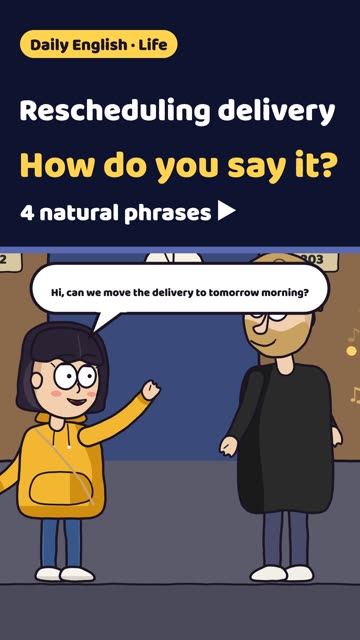
Inglés de cada día para pedirle a un vecino que reciba un paquete. Frase clave: “If it needs a signature, could you text me first?”
Guion completo
Pedir a un vecino que reciba un paquete: cómo es de verdad
Le pides a un vecino que le eche un ojo a un paquete por ti, y acuerdan la hora y unos pocos detalles sencillos. Después de esto, puedes hacer la petición con claridad y responder las preguntas de seguimiento habituales.
Intermedio Conversación cotidiana con pequeños detalles como firmas y avisar por mensaje primero.
Un favor normal entre vecinos
Es un favor común en edificios de apartamentos o compartidos, sobre todo cuando pueden dejar un paquete afuera. Normalmente se mantiene con cortesía y sencillez, con una sola petición clara y un detalle como la hora o una firma.
Por qué estas frases suenan naturales
“Can you take in a package for me?” suena amable y directo, no autoritario. En “If it needs a signature,” el inglés suele poner primero la condición, y “I owe you one” es una forma ligera y natural de agradecer.
Cuidado con la traducción literal
Muchos estudiantes dicen “please help me receive the express” o “can you sign for my courier”, pero eso suena forzado en inglés. Di “take in a package” o “hold on to a package for me”, y si hace falta, “Could you text me first?”
El mismo momento en tres niveles
Lo que Lin dice primero en cada versión. Elige la que te parezca un poco difícil.
Chequeo rápido
1Dicen: “Sure. Is it the small box or the giant one again?” ¿Qué dices tú?
Esa es la frase de Lin en la escena.
2Dicen: “Yeah, no problem. I'll keep my phone close.” ¿Qué dices tú?
Esa es la frase de Lin en la escena.
Cada frase de la escena, en inglés
¿Cómo se dice «Oye, ¿podrías recibir un paquete por mí si llega» en inglés?
Puedes decir: Hey, could you take in a package for me if it shows up?
Lin pide un favor con could you y una condición suave, no como orden.
¿Qué significa «Sure. Is it the small box or the giant one again?» y cómo responder?
Significa «Claro. ¿Es la cajita pequeña o la enorme otra vez». Puedes responder: Hopefully the small one; the giant one was just socks.
Responde rápido y luego aclara cuál paquete es, de forma natural.
¿Cómo se dice «Ojalá sea la pequeña; la enorme eran solo calcetines» en inglés?
Puedes decir: Hopefully the small one; the giant one was just socks.
Lin hace un chiste sobre la caja grande para sonar casual y ligero.
¿Qué significa «Got it. Want me to leave it by your door?» y cómo responder?
Significa «Entendido. ¿Quieres que lo deje junto a tu puerta». Puedes responder: If it needs a signature, could you text me first?
Usa Want me to para ofrecer ayuda de forma directa y amable.
¿Cómo se dice «Si necesita firma, ¿me puedes escribir antes» en inglés?
Puedes decir: If it needs a signature, could you text me first?
If it needs a signature hace la petición más precisa y educada.
¿Qué significa «Yeah, no problem. I'll keep my phone close» y cómo responder?
Significa «Sí, no hay problema. Tendré el móvil cerca». Puedes responder: Thanks, Ben. I owe you, unless it's another sock mountain.
La respuesta suena tranquila, y keep my phone close dice que estará atento.
¿Cómo se dice «Gracias, Ben. Te debo una, a menos que sea otra montaña de calcetines» en inglés?
Puedes decir: Thanks, Ben. I owe you, unless it's another sock mountain.
I owe you es una forma amistosa de decir que queda una deuda de favor.
¿Qué significa «Deal. If it's socks again, I'm charging storage fees» y cómo responder?
Significa «Trato hecho. Si son calcetines otra vez, te cobro por almacenaje». Puedes responder:
El chiste convierte los calcetines en un negocio falso para bromear.
Expresiones útiles de esta escena
¿Cómo se dice «recibir un paquete por alguien» en inglés?
take in a package
Hey, could you take in a package for me if it shows up?
¿Cómo se dice «si llega» en inglés?
if it shows up
Hey, could you take in a package for me if it shows up?
¿Cómo se dice «la caja pequeña» en inglés?
the small box
Sure. Is it the small box or the giant one again?
¿Cómo se dice «el pequeño» en inglés?
the small one
Hopefully the small one; the giant one was just socks.
¿Cómo se dice «eran solo calcetines» en inglés?
just socks
Hopefully the small one; the giant one was just socks.
¿Cómo se dice «¿quieres que yo» en inglés?
Want me to want me to…? →
Got it. Want me to leave it by your door?
¿Cómo se dice «junto a tu puerta» en inglés?
by your door
Got it. Want me to leave it by your door?
¿Cómo se dice «si hace falta firmar» en inglés?
If it needs a signature
If it needs a signature, could you text me first?
¿Cómo se dice «mándame un mensaje primero» en inglés?
text me first
If it needs a signature, could you text me first?
¿Cómo se dice «no pasa nada» en inglés?
no problem no problem →
Yeah, no problem. I'll keep my phone close.
¿Cómo se dice «tener el móvil cerca» en inglés?
keep my phone close
Yeah, no problem. I'll keep my phone close.
¿Cómo se dice «te debo una» en inglés?
I owe you
Thanks, Ben. I owe you, unless it's another sock mountain.
¿Cómo se dice «una montaña de calcetines» en inglés?
sock mountain
Thanks, Ben. I owe you, unless it's another sock mountain.
¿Cómo se dice «trato hecho» en inglés?
Deal Deal. →
Deal. If it's socks again, I'm charging storage fees.
¿Cómo se dice «tarifas de almacenamiento» en inglés?
storage fees
Deal. If it's socks again, I'm charging storage fees.
Errores comunes aquí
Otras formas en que te lo pueden decir
sí; ¿el pequeño o el gigante otra vez?
≈ Sure. Is it the small box or the giant one again?
¿quieres que lo deje en tu puerta?
≈ Got it. Want me to leave it by your door?
si son calcetines otra vez, cobraré guardado
≈ Deal. If it's socks again, I'm charging storage fees.
Frases clave
Las líneas que vale la pena guardar. Léelas una vez antes de salir.
Se usa cuando un vecino lo acepta por ti
Más preciso que take; muy común con vecinos
Úsalo antes de que alguien lo firme por ti
Con 'it,' usa needs, no need
Pídelo para que te manden un mensaje antes de hacerlo
Más cotidiano que call
Agradecimiento informal por un favor
Muy común para dar las gracias a amigos o vecinos
Frases comunes en esta escena
Respuestas rápidas
¿Cómo le pido a mi vecino que reciba un paquete por mí?
Di: "Hey, could you take in a package for me if it shows up?" Si quieres, añade "If it needs a signature, could you text me first?"
¿Cómo digo que me avise antes de firmar?
Di: "If it needs a signature, could you text me first?" Es claro y natural.
¿Cómo le digo que lo deje en mi puerta?
Di: "Want me to leave it by your door?" Si te parece bien, responde que sí.
¿Cómo agradezco el favor?
Di: "Thanks, Ben. I owe you."
¿Cómo digo que la caja grande era solo de calcetines?
Di: "Hopefully the small one; the giant one was just socks." Si el detalle cambia, usa tu propia situación.