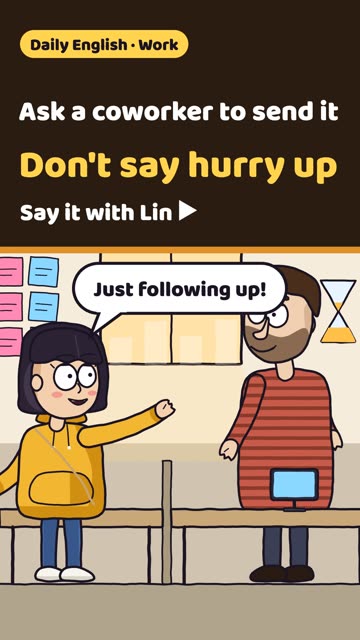
Cómo hacer seguimiento con un cliente que no ha respondido en inglés
Inglés cotidiano para hacer seguimiento con un cliente que no ha respondido. Frase clave: “I just wanted to follow up on my email.”
Guion completo
Hacer seguimiento con un cliente que no ha respondido: cómo es de verdad
Este es el momento en que haces un seguimiento después de que un cliente no ha respondido. Aprenderás a insistir con amabilidad y ofrecer ayuda al mismo tiempo.
Intermedio Esta versión se centra en el habla cotidiana del trabajo, con un poco más de cortesía y detalle.
Empieza con suavidad
En los correos de trabajo, la gente suele decir por qué escribe antes de volver a preguntar. “I'm just following up on my last email.” suena natural y educado, no insistente.
Por qué funcionan las frases
“Did you see the price list?” y “I can send it again right now.” son cortas y claras. La primera comprueba la información, y la segunda ofrece ayuda enseguida, lo que suena natural en inglés.
Error común
Una frase directa al estilo chino como “Please reply to me soon” puede sonar demasiado dura. Una mejor versión es “I just wanted to follow up” o “I can send it again,” que mantiene un tono amable y tranquilo.
El mismo momento en tres niveles
Lo que Lin dice primero en cada versión. Elige la que te parezca un poco difícil.
Chequeo rápido
1Dicen: “Sorry, I saw it, but my inbox buried it.” ¿Qué dices tú?
Esa es la frase de Lin en la escena.
2Dicen: “Perfect. My inbox has been hiding things all week.” ¿Qué dices tú?
Esa es la frase de Lin en la escena.
Cada frase de la escena, en inglés
¿Cómo se dice «Hola, Emma. Solo quería hacer seguimiento de mi correo» en inglés?
Puedes decir: Hi Emma, I just wanted to follow up on my email.
Es un seguimiento amable tras no tener respuesta; just wanted lo hace suave.
¿Qué significa «Sorry, I saw it, but my inbox buried it» y cómo responder?
Significa «Perdón, sí lo vi, pero mi bandeja de entrada lo enterró». Puedes responder: No worries. Do you need anything else from me?
La persona explica el retraso de forma casual; buried it suena natural e informal.
¿Cómo se dice «No te preocupes. ¿Necesitas algo más de mí» en inglés?
Puedes decir: No worries. Do you need anything else from me?
No worries mantiene un tono amable, y la pregunta ofrece ayuda sin presionar.
¿Qué significa «Just the updated quote, and I can review it today» y cómo responder?
Significa «Solo el presupuesto actualizado, y puedo revisarlo hoy». Puedes responder: Great, I'll send it right after this call.
Just lo vuelve breve, y and I can review it today marca el siguiente paso.
¿Cómo se dice «Genial, te lo envío justo después de esta llamada» en inglés?
Puedes decir: Great, I'll send it right after this call.
Right after this call significa justo después de la llamada, una promesa rápida y natural.
¿Qué significa «Perfect. My inbox has been hiding things all week» y cómo responder?
Significa «Perfecto. Mi bandeja de entrada ha estado escondiendo cosas toda la semana». Puedes responder: Then I'll make the subject super clear this time.
La frase mantiene el chiste ligero; suena juguetona, no una queja seria.
¿Cómo se dice «Entonces esta vez pondré el asunto súper claro» en inglés?
Puedes decir: Then I'll make the subject super clear this time.
Make the subject super clear es una solución práctica, y this time marca el cambio.
¿Qué significa «Thanks—if it disappears again, I'll blame the office ghost» y cómo responder?
Significa «Gracias—si vuelve a desaparecer, le echaré la culpa al fantasma de la oficina». Puedes responder:
El chiste del ghost mantiene el tono amistoso, y if it disappears again suena casual.
Expresiones útiles de esta escena
¿Cómo se dice «dar seguimiento al correo» en inglés?
follow up on my email
Hi Emma, I just wanted to follow up on my email.
¿Cómo se dice «solo quería» en inglés?
just wanted
Hi Emma, I just wanted to follow up on my email.
¿Cómo se dice «mi bandeja lo enterró» en inglés?
my inbox buried it
Sorry, I saw it, but my inbox buried it.
¿Cómo se dice «no pasa nada» en inglés?
No worries no worries →
No worries. Do you need anything else from me?
¿Cómo se dice «la cotización actualizada» en inglés?
the updated quote
Just the updated quote, and I can review it today.
¿Cómo se dice «puedo revisarlo hoy» en inglés?
I can review it today
Just the updated quote, and I can review it today.
¿Cómo se dice «justo después de esta llamada» en inglés?
right after this call
Great, I'll send it right after this call.
¿Cómo se dice «lo enviaré» en inglés?
I'll send it
Great, I'll send it right after this call.
¿Cómo se dice «mi bandeja ha estado escondiendo cosas» en inglés?
My inbox has been hiding things
Perfect. My inbox has been hiding things all week.
¿Cómo se dice «toda la semana» en inglés?
all week
Perfect. My inbox has been hiding things all week.
¿Cómo se dice «dejar el asunto muy claro» en inglés?
make the subject super clear
Then I'll make the subject super clear this time.
¿Cómo se dice «esta vez» en inglés?
this time
Then I'll make the subject super clear this time.
¿Cómo se dice «si vuelve a desaparecer» en inglés?
if it disappears again
Thanks—if it disappears again, I'll blame the office ghost.
¿Cómo se dice «culparé al fantasma de la oficina» en inglés?
I'll blame the office ghost
Thanks—if it disappears again, I'll blame the office ghost.
Errores comunes aquí
Otras formas en que te lo pueden decir
se me pasó en la bandeja
≈ Sorry, I saw it, but my inbox buried it.
envía la cotización actualizada
≈ Just the updated quote, and I can review it today.
si se pierde otra vez, culparé al fantasma
≈ Thanks—if it disappears again, I'll blame the office ghost.
Frases clave
Las líneas que vale la pena guardar. Léelas una vez antes de salir.
Forma cortés de preguntar por tu correo
Forma educada de recordarles que lo revisen o respondan
Preguntar si necesitan algo más de ti
Útil para que todo siga avanzando
Justo después de la llamada
Muestra que lo harás a continuación
Escribir una línea de asunto muy clara
Ayuda a que el correo llame la atención
Frases comunes en esta escena
Frases de esta escena, y otras formas de decirlas
Respuestas rápidas
¿Cómo digo “quiero dar seguimiento a mi correo”?
Di: "I just wanted to follow up on my email." Si quieres, añade el nombre de la persona, como "Hi Emma."
¿Qué puedo decir si el cliente aún no responde?
Di: "No worries. Do you need anything else from me?" Suena amable y profesional.
¿Cómo digo que lo enviaré enseguida?
Di: "Great, I'll send it right after this call."
¿Cómo digo que haré el asunto del correo más claro?
Di: "Then I'll make the subject super clear this time." Ayuda si el correo se perdió.
¿Cómo pido la cotización actualizada?
Di: "Just the updated quote, and I can review it today." Cambia la cotización por la tuya si es necesario.