Asking for a quieter table in English
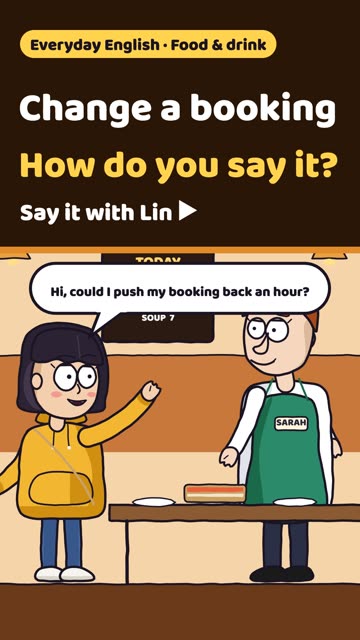
Everyday English for asking for a quieter table. Key line: “Hi, could we move to a quieter table, if that's possible?”
Full script
Asking for a quieter table: how it really goes
You are in a restaurant and the room feels too loud. You can ask for a quieter table in a polite way.
Intermediate Everyday polite requests and natural wording for a table change.
How this goes
In a restaurant, it is normal to ask for another table if your spot is near noise from the door, kitchen, bar, or a busy group. People usually ask politely, not too strongly. In the US and UK, this is fine in most casual places.
Why the lines work
“Can we get a quieter table?” sounds natural because it is soft and direct. “I’d like somewhere less busy.” also works because native speakers often use “somewhere” when they do not name a specific table.
Common trap
A learner may say, “Give us a quiet table,” which can sound rude. Better: “Could we get a quieter table?” or “Is there a table away from the kitchen?” These sound like a request, not an order.
The same moment at three levels
What Lin says first in each version. Pick the one that feels a little hard.
Quick check
1They say: “Sure—would you like a spot away from the kitchen?” What do you say?
That's Lin's line in the scene.
2They say: “Much less. You might even hear yourselves chew.” What do you say?
That's Lin's line in the scene.
How to respond, line by line
When do you say “Hi, could we move to a quieter table, if that's possible?”
Hi, could we move to a quieter table, if that's possible?
Lin uses a polite request with "could we" and "if that's possible" to sound gentle, not demanding.
How do you respond to “Sure—would you like a spot away from the kitchen?”
Lin answers: Yes, please. That blender is kind of winning the conversation.
The other person offers a helpful option, and would you like sounds soft and service-minded.
How do you respond to “I get it. I have one booth by the window”?
Lin answers: That sounds great. Is it a little less busy over there?
I get it shows empathy, and one booth by the window is a short, natural way to offer a seat.
How do you respond to “Much less. You might even hear yourselves chew”?
Lin answers: Perfect. We'd love it, unless the blender follows us.
Much less is a short answer, and hear yourselves chew is a funny exaggeration about the quiet.
Useful phrases from this scene
What does “a quieter table” mean?
a table with less noise.
Hi, could we move to a quieter table, if that's possible?
What does “if that's possible” mean?
if it can be done.
Hi, could we move to a quieter table, if that's possible?
What does “away from the kitchen” mean?
not near the kitchen.
Sure—would you like a spot away from the kitchen?
What does “Yes, please” mean?
a polite yes.
Yes, please. That blender is kind of winning the conversation.
What does “kind of” mean?
sort of. kind of →
Yes, please. That blender is kind of winning the conversation.
What does “winning the conversation” mean?
taking over the talking.
Yes, please. That blender is kind of winning the conversation.
What does “I get it” mean?
I understand.
I get it. I have one booth by the window.
What does “one booth by the window” mean?
one booth near the window.
I get it. I have one booth by the window.
What does “That sounds great” mean?
that seems really good.
That sounds great. Is it a little less busy over there?
What does “a little less busy” mean?
less crowded.
That sounds great. Is it a little less busy over there?
What does “Much less” mean?
a lot less.
Much less. You might even hear yourselves chew.
What does “hear yourselves chew” mean?
hear your own chewing.
Much less. You might even hear yourselves chew.
What does “We'd love it” mean?
we would really like that.
Perfect. We'd love it, unless the blender follows us.
What does “unless the blender follows us” mean?
unless the blender comes too.
Perfect. We'd love it, unless the blender follows us.
What does “Don't worry” mean?
no need to worry. don't worry →
Don't worry—it only attacks table twelve. Right this way.
What does “Right this way” mean?
follow me this way.
Don't worry—it only attacks table twelve. Right this way.
Common mistakes here
Other ways they might say it
≈ Sure—would you like a spot away from the kitchen?
≈ I get it. I have one booth by the window.
≈ Don't worry—it only attacks table twelve. Right this way.
Key phrases
The lines worth keeping. Read them once before you go out.
For a less noisy seat
Useful when you want it quieter
Makes it softer
More natural at the end
Not close to the kitchen
away from + place
Warm way to accept
Warmer than just Yes
Common phrases in this scene
Quick answers
How do I ask for a quieter table?
Say: “Hi, could we move to a quieter table, if that's possible?” Tip: keep it polite with “could we” and “if that's possible.”
How do I ask for a table away from the kitchen?
Say: “Would you like a spot away from the kitchen?” or answer “Yes, please.” Tip: this is a useful reply when they offer options.
How do I say I want the quieter booth by the window?
Say: “I have one booth by the window.” Then you can answer “That sounds great.” Tip: if there are names or numbers in your scene, use your own.
How do I ask if the new table is less noisy?
Say: “Is it a little less busy over there?” Tip: “less busy” is a natural way to say “quieter” in a restaurant.
How do I accept the table politely?
Say: “We'd love it.” Tip: you can add “unless the blender follows us” only if you want to sound playful.