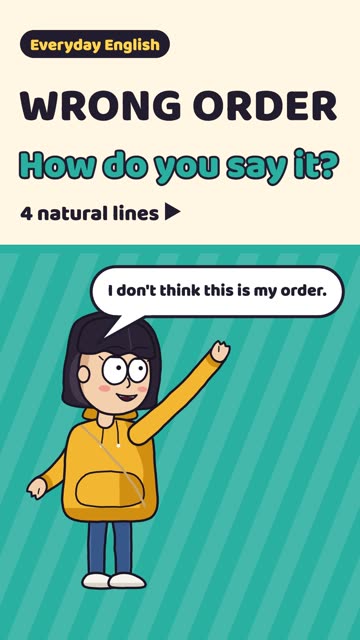
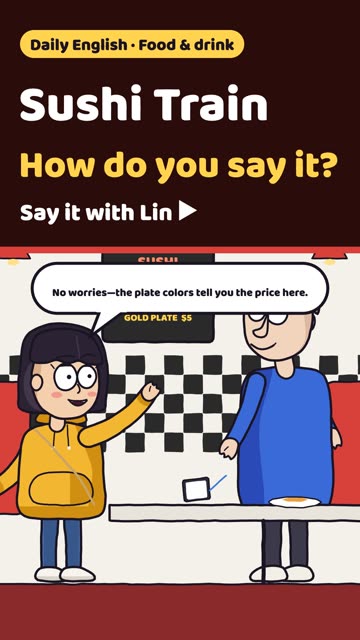
Ordering sushi with no wasabi in English
What to say when ordering sushi, asking what's in it, and checking if it's raw.
Full script
Ordering sushi with no wasabi: how it really goes
You are ordering sushi and making sure there is no wasabi. You will learn how to ask for that clearly and add another item in a polite way.
Intermediate This version adds simple follow-up questions and small talk at the counter.
How this usually goes
In sushi places, it is normal to say what you do not want, like no wasabi. The staff may check again, because some people want wasabi on the side and some want none at all.
Why the lines sound natural
“I'd like salmon nigiri, no wasabi, please.” sounds polite and clear. “Anything else for you?” is a very common shop question, and people often answer it with a short yes or no.
A common mistake
A learner may say “Do not add wasabi” or “I do not eat wasabi,” which can sound stiff. A more natural line is “No wasabi, please” or “Could I get this without wasabi?”
The same moment at three levels
What Lin says first in each version. Pick the one that feels a little hard.
Quick check
1They say: “Sure. Would you like to try today's special?” What do you say?
That's Lin's line in the scene.
2They say: “Yes, but it's super fresh. Try it with a little soy sauce.” What do you say?
That's Lin's line in the scene.
How to respond, line by line
When do you say “Hi, can I get the salmon nigiri, no wasabi, please?”
Hi, can I get the salmon nigiri, no wasabi, please?
Lin orders first and adds “no wasabi” to sound polite while making the request clear.
How do you respond to “Sure. Would you like to try today's special?”
Lin answers: What's in it?
The server offers a suggestion, and “Would you like to” is a polite way to invite a choice.
How do you respond to “Fresh tuna and sea urchin, straight from the market”?
Lin answers: Sounds amazing. Is it raw?
The server lists the main ingredients and adds “straight from the market” to make it sound fresh and appealing.
How do you respond to “Yes, but it's super fresh. Try it with a little soy sauce”?
Lin answers: Okay, I'm in! And some green tea, please.
The server says “but” to ease the worry, then gives a tip with “Try it with” to sound helpful.
Useful phrases from this scene
What does “no wasabi” mean?
without wasabi.
Hi, can I get the salmon nigiri, no wasabi, please?
What does “Would you like to” mean?
would you like to.
Sure. Would you like to try today's special?
What does “today's special” mean?
today’s featured dish.
Sure. Would you like to try today's special?
What does “What's in it?” mean?
what ingredients are in it.
What's in it?
What does “straight from the market” mean?
directly from the market.
Fresh tuna and sea urchin, straight from the market.
What does “fresh tuna and sea urchin” mean?
fresh tuna and sea urchin.
Fresh tuna and sea urchin, straight from the market.
What does “Sounds amazing” mean?
that sounds great.
Sounds amazing. Is it raw?
What does “Is it raw?” mean?
is it uncooked.
Sounds amazing. Is it raw?
What does “super fresh” mean?
very fresh.
Yes, but it's super fresh. Try it with a little soy sauce.
What does “Try it with” mean?
eat it together with.
Yes, but it's super fresh. Try it with a little soy sauce.
What does “Okay, I'm in!” mean?
count me in.
Okay, I'm in! And some green tea, please.
What does “some green tea” mean?
an amount of green tea.
Okay, I'm in! And some green tea, please.
What does “coming up” mean?
coming right away.
One special, coming up!
What does “One special” mean?
one special dish.
One special, coming up!
Common mistakes here
Other ways they might say it
≈ Sure. Would you like to try today's special?
≈ Yes, but it's super fresh. Try it with a little soy sauce.
≈ One special, coming up!
Key phrases
The lines worth keeping. Read them once before you go out.
Polite: ask for no wasabi
wasabi hot paste / ginger pickled ginger / soy sauce salty sauce / nigiri = hand-pressed sushi
Ask about the ingredients
Use for any dish; today's special = chef's special today
Ask if it is uncooked
raw = uncooked; cooked = done; sea urchin = uni
Say yes to trying it
I'm in = yes, I want to join; also for meals or plans
Common phrases in this scene
Quick answers
How do I say “不要芥末” when ordering sushi?
Say, "no wasabi, please." If needed, put it after the item: "the salmon nigiri, no wasabi, please."
How do I ask what is in the special?
Say, "What's in it?" It works when the server suggests a dish and you want the ingredients.
How do I ask if the sushi is raw?
Say, "Is it raw?" It's short and natural in a sushi restaurant.
How do I say I want to try it?
Say, "Okay, I'm in!" It means you're willing to try it.
How do I order tea too?
Say, "And some green tea, please." Use your own drink if you want something different.