Presenting a project in English
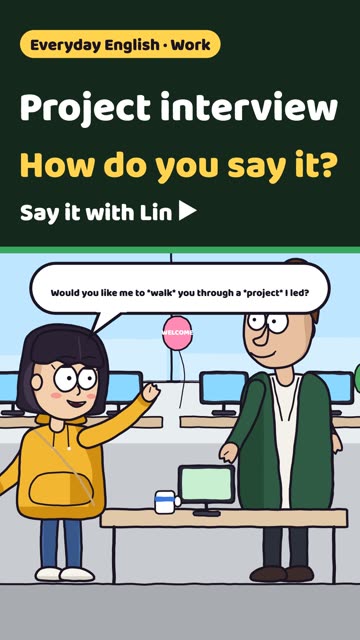
Everyday English for presenting a project. Key line: “Hey, can I walk you through our project idea?”
Full script
Presenting a project: how it really goes
This scene is about introducing a project at work. You can learn how to start clearly, give the main points, and sound natural.
Intermediate This version focuses on everyday small talk for explaining the idea and answering follow-up questions.
Start with the purpose
In work situations, people usually want to know why you are speaking first. “I'd like to present our project.” is polite, clear, and common.
Lead with the main idea
“First, it's a smart plant waterer.” gives the big picture before the details. English speakers often put the main point early, so the talk feels organized and easy to follow.
Don't make “last” sound final
“Last, it's cheap and easy to use.” means “one more point,” not “the end.” A common trap is to translate from Chinese too literally and sound stiff. “Lastly” or “Finally” can sound smoother.
The same moment at three levels
What Lin says first in each version. Pick the one that feels a little hard.
Quick check
1They say: “Sure, go ahead—I've got ten minutes and coffee.” What do you say?
That's Lin's line in the scene.
2They say: “Got it. And how is it different from regular task lists?” What do you say?
That's Lin's line in the scene.
How to respond, line by line
When do you say “Hey, can I walk you through our project idea?”
Hey, can I walk you through our project idea?
Lin uses a friendly offer to explain step by step, not just talk fast.
How do you respond to “Sure, go ahead—I've got ten minutes and coffee”?
Lin answers: Great. It helps small teams track tasks without spreadsheets.
The other person agrees quickly and sounds relaxed, so Lin can start right away.
How do you respond to “Okay, so what's the main problem it solves?”
Lin answers: People lose updates in long chat threads, so things slip.
The question asks for the biggest pain point, a common way to push a project pitch forward.
How do you respond to “Got it. And how is it different from regular task lists?”
Lin answers: It sends gentle reminders, and I promise no pie charts.
This follow-up compares the idea with something familiar, which helps the listener judge it fast.
Useful phrases from this scene
What does “walk you through” mean?
guide you step by step.
Hey, can I walk you through our project idea?
What does “our project idea” mean?
the idea for our project.
Hey, can I walk you through our project idea?
What does “go ahead” mean?
please continue. go ahead →
Sure, go ahead—I've got ten minutes and coffee.
What does “I've got ten minutes” mean?
I have ten minutes free.
Sure, go ahead—I've got ten minutes and coffee.
What does “It helps small teams” mean?
It is useful for small teams.
Great. It helps small teams track tasks without spreadsheets.
What does “track tasks” mean?
keep track of tasks.
Great. It helps small teams track tasks without spreadsheets.
What does “the main problem” mean?
the biggest problem.
Okay, so what's the main problem it solves?
What does “it solves” mean?
it fixes or handles.
Okay, so what's the main problem it solves?
What does “long chat threads” mean?
long message chains.
People lose updates in long chat threads, so things slip.
What does “things slip” mean?
things get missed or delayed.
People lose updates in long chat threads, so things slip.
What does “How is it different from” mean?
How is it unlike.
Got it. And how is it different from regular task lists?
What does “regular task lists” mean?
normal to-do lists.
Got it. And how is it different from regular task lists?
What does “gentle reminders” mean?
soft, friendly reminders.
It sends gentle reminders, and I promise no pie charts.
What does “I promise” mean?
I swear. I promise →
It sends gentle reminders, and I promise no pie charts.
What does “I'm listening” mean?
I'm paying attention.
Perfect—pie charts always make me hungry, so I'm listening.
What does “make me hungry” mean?
make me want food.
Perfect—pie charts always make me hungry, so I'm listening.
Common mistakes here
Other ways they might say it
≈ Okay, so what's the main problem it solves?
≈ Got it. And how is it different from regular task lists?
≈ Hey, can I walk you through our project idea?
Key phrases
The lines worth keeping. Read them once before you go out.
used to present something clearly
Common in spoken English to explain things
listener says yes, continue
Use when someone agrees you can begin
asks what problem it solves
Natural way to ask a product's value
asks how it is different
Useful for comparing features
Common phrases in this scene
Quick answers
How do I start presenting a project in English?
Say, "Hey, can I walk you through our project idea?" If it’s your own project, you can replace the idea with your own details.
How do I say the project helps people?
Say, "It helps small teams track tasks without spreadsheets." Use your own team or product details if needed.
How do I explain the main problem it solves?
Say, "People lose updates in long chat threads, so things slip." This is a clear way to describe the pain point.
How do I say what makes it different?
Say, "How is it different from regular task lists?" Then answer with the feature that is unique.
How do I say it sends reminders?
Say, "It sends gentle reminders." If your project has a different feature, swap in your own wording.
What does “go ahead” mean, and when do you say it?
“go ahead”: listener says yes, continue. Use when someone agrees you can begin.
What does “What's the main problem it solves” mean, and when do you say it?
“What's the main problem it solves?”: asks what problem it solves. Natural way to ask a product's value.